
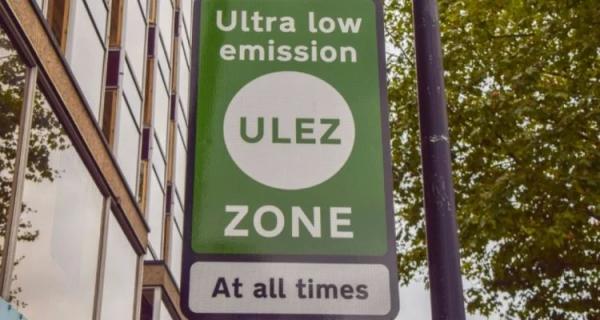
The recent expansion of the Ultra Low Emission Zone (ULEZ) across London has reportedly exceeded expectations, significantly reducing pollutant emissions, according to data from City Hall.
A report from the Greater London Authority highlights a marked decrease in emissions since the ULEZ expansion to all boroughs, with Nitrogen Oxide (NOx) and Particulate Matter (PM2.5) levels dropping notably.
The Ultra Low Emission Zone (ULEZ) was initially introduced in central London in April 2019, aiming to improve air quality by discouraging the use of older, more polluting vehicles. The scheme requires vehicles to meet strict emissions standards or face a daily charge. In August 2023, the ULEZ was expanded to cover all London boroughs, a move that has now been shown to have a substantial impact on air quality.
According to the report, NOx emissions from cars and vans in outer London have decreased by 13% and 7% respectively, equating to the removal of approximately 200,000 cars from the roads for a year. Furthermore, PM2.5 emissions from cars in these areas are 22% lower than they would have been without the ULEZ expansion, surpassing initial expectations by 6%. These reductions align with, and in some cases exceed, the projections made by Transport for London (TfL) during the consultation phase for the expansion.
The report underscores the dramatic impact of ULEZ policies on air quality across the capital. Harmful roadside nitrogen dioxide (NO2) concentrations have decreased by 21% in outer London, 53% in central London, and 24% in inner London compared to levels without the ULEZ and its expansions. This improvement is occurring at a faster rate than the national average for England. In 2014, the NO2 level disparity between London and the rest of England was 20 micrograms per cubic metre (g/m3); it has now reduced to less than 5 g/m3.
The expansion has brought five million more Londoners within the ULEZ's remit. Historically, outer London has suffered from poorer air quality compared to the national average. However, the City Hall report indicates that pollution levels in these areas are now much closer to those in the rest of the country. In the first six months alone, roadside NO2 levels in outer London have decreased by up to 4.4% compared to what was expected without the ULEZ expansion.
Compliance with ULEZ standards has also exceeded projections, with 96.2% of all vehicles in London now meeting the required emissions standards, up from 90.9% in June 2023. The number of older, more polluting vehicles on London's roads has significantly decreased, with a reduction of 90,000 non-compliant vehicles detected daily in February 2024 compared to June 2023—a 53% decrease in non-compliant vehicles within the first six months.
The Mayor's office has described this preliminary data as indicative of 'significant progress,' with a comprehensive report expected in early 2025 to cover the first full year of the London-wide ULEZ expansion. This report will be supported by an independent advisory group of experts to ensure accuracy and transparency.
The Mayor of London, Sadiq Khan, has expressed his satisfaction with the results, stating that the decision to expand the ULEZ was challenging but necessary to safeguard public health. He emphasised the importance of the expansion in reducing pollution levels, removing older polluting vehicles from the roads, and improving air quality for millions of Londoners. Khan highlighted that London's air quality is improving at a faster rate than the rest of England, with 96% of vehicles now compliant and many Londoners benefiting from the scrappage scheme.
The ULEZ expansion is part of a broader strategy to bring London's air quality within legal limits by 2025, a target set to be achieved 184 years earlier than previously projected. The Mayor has pledged to continue taking bold actions to further clean up the city's air and rivers, contributing to a fairer, greener London for all residents.
Travel
ULEZ Expansion in London Surpasses Expectations with Major Emission Reductions
The recent expansion of the Ultra Low Emission Zone (ULEZ) across London has reportedly exceeded expectations, significantly reducing pollutant emissions, according to data from City Hall.



Comments (0)
You must be logged in to post comments.
Don't have an account? Register here
No comments yet. Be the first to share your thoughts!